
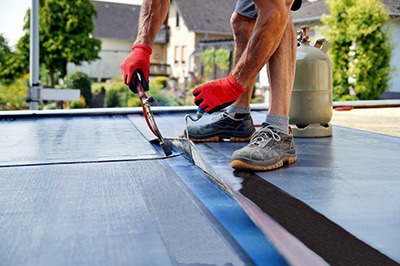
Common flat roofing problems include ponding water, leaks, damaged seams, membrane punctures, flashing failures, and trapped moisture. These issues require professional attention because the correct repair depends on the roofing material, the extent of the damage, and the condition of the surrounding system.
Despite their name, flat roofs are built with a slight slope that directs water toward drains or gutters. When drainage or roofing materials fail, moisture can collect and eventually enter your home. Prompt inspections and repairs can limit damage and help prevent premature roof replacement.
What Are the Most Common Flat Roof Problems?
Flat roofs can develop several problems as they age or withstand severe weather. Recognizing the signs can help you arrange service before a small defect leads to widespread water damage.
Ponding Water and Poor Drainage
Ponding occurs when water remains on a flat roof instead of draining away. Clogged drainage components, inadequate slope, and low areas in the roof can all contribute to standing water.
Water that remains on the surface for an extended period can place added stress on roofing materials and increase the likelihood of leaks. A roofing professional may need to address low spots, restore damaged materials, or improve the drainage system.
Leaks Around Seams and Flashing
Seams, roof edges, vents, skylights, and other penetrations are common places for flat roof leaks to develop. Temperature changes and weather exposure can loosen flashing, weaken sealants, or cause seams to separate.
Professional repairs may involve resealing seams, replacing damaged flashing, or repairing the surrounding membrane. The products and methods used must be compatible with the existing flat roofing material.
Cracks, Punctures, and Open Membrane Seams
Storm debris, foot traffic, falling branches, and normal deterioration can crack or puncture a flat roof membrane. Open seams may also allow water beneath the surface, where the damage can spread before it becomes visible inside your home.
Localized damage may be repairable with a properly installed patch or sealed seam. A professional inspection is important for determining whether moisture has affected the materials beneath the visible damage.
Blistering, Bubbling, and Trapped Moisture
Bubbles or raised areas can form when moisture or air becomes trapped beneath the roofing material. These areas may eventually split open and expose the roof to additional water intrusion.
Blisters should be professionally evaluated rather than opened or covered without determining their cause. The right roof repair depends on the blister’s size, location, and effect on the surrounding material.
How Does Quad Cities Weather Affect Flat Roofs?
Flat roofs in Davenport and the Quad Cities must withstand changing temperatures, heavy rain, snow, ice, and severe storms. Repeated expansion and contraction can place stress on membranes, seams, flashing, and sealants.
Snow accumulation and freeze-thaw cycles can also challenge drainage systems. Water may enter a vulnerable area, freeze, expand, and worsen existing damage. Because storm damage is not always visible from the ground, a professional roof inspection can identify issues that might otherwise go unnoticed.
Should a Flat Roof Be Repaired or Replaced?
A repair may be appropriate when damage is limited to a small area and the surrounding roof remains in good condition. You can often address individual punctures, failed seams, loose flashing, and isolated leaks without replacing the entire roof.
Replacement may be the better option when a roof has widespread moisture damage, recurring leaks, extensive membrane deterioration, or multiple failing areas. The system’s age matters, but it should not be the only factor in the decision.
Evenhouse Roofing works with built-up roofing, modified bitumen, and EPDM rubber roofing systems. We can evaluate the existing material and overall roof condition before recommending repair or replacement.
How Can Homeowners Prevent Future Flat Roofing Problems?
Routine professional inspections and preventative maintenance can help identify weak seams, drainage concerns, and material damage early.
- Water stains on ceilings or walls
- Recurring leaks after rain or melting snow
- Visible bubbling or sagging
- Loose or damaged flashing
- Water collecting on the roof
Avoid walking on the roof or attempting temporary patches yourself. Flat roof damage can extend beneath the visible surface, and incompatible repair materials may hide the problem without stopping the leak.
Schedule Flat Roof Service in Davenport With Evenhouse Roofing
Flat roof problems are easier to manage when they are found and corrected early. Ponding water, damaged membranes, failed seams, and flashing problems can all lead to more extensive damage when left unresolved.
Evenhouse Roofing provides flat roof inspections, repairs, emergency roof repairs, storm damage services, and replacements throughout Davenport and the Quad Cities. Our licensed and insured team will assess your roofing system and recommend a solution based on its material and condition. Contact us today to schedule flat roof service in Davenport, IA, and the Quad Cities.