
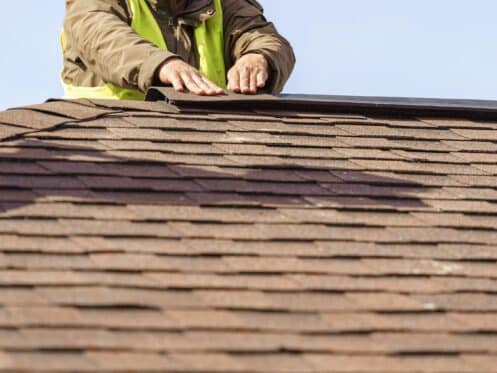
Late fall isn’t necessarily too late for a roof replacement in Davenport, IA. In fact, replacing an aging or damaged roof before winter can prevent bigger problems when snow, ice, and freezing temperatures arrive. However, colder weather also creates installation challenges, especially with asphalt shingles.
Whether you should move forward depends on your roof’s condition, the materials being installed, and the weather forecast. Here’s what to consider before deciding whether to replace your roof now or wait until spring.
Benefits of Replacing Your Roof in Late Fall
One of the biggest advantages of a late-fall roof replacement is getting ahead of Iowa’s winter weather. If your existing roof is already leaking or showing widespread wear, waiting several more months could allow moisture to reach the roof decking or attic.
Other benefits of fall roof replacement:
- Protection before winter: A new roof can address worn materials and vulnerable areas before snow and ice accumulate.
- Preventing additional damage: Replacing failing roofing materials may help prevent leaks that could worsen during winter.
- Potential scheduling flexibility: Depending on the contractor’s workload, late fall may offer appointment availability before the next busy roofing season.
- Peace of mind: You won’t have to spend winter worrying about whether an aging roof can withstand another snowstorm.
Our roof replacement services cover asphalt shingles, metal roofing, and flat roofs. We’ll assess your existing system and help determine whether replacement is practical before winter.
Challenges of a Late-Fall Roof Replacement in Davenport
Cold weather doesn’t automatically prevent roofing work, but it can limit when and how certain materials are installed. Shorter daylight hours also leave less time for crews to complete work safely.
Cold Temperatures Affect Asphalt Shingles
Many asphalt shingles have adhesive strips that rely on warmth to seal properly. During colder weather, these strips may not activate immediately, leaving newly installed shingles more vulnerable to wind until they seal.
Shingles can also become less flexible in low temperatures, increasing the risk of cracking during handling. Our asphalt shingle roofing options include different products with manufacturer-specific installation requirements. The right approach depends on the shingles selected and the conditions expected during installation.
Weather Delays Can Interrupt Installation
Rain, snow, frost, and strong winds can delay roof replacement. Roofing contractors also need suitable conditions to install underlayment and protect exposed decking from moisture.
If a project can’t be completed before unfavorable weather arrives, temporary protection may be necessary. That’s why reviewing the forecast and planning for possible delays is particularly important in November and early December.
Should You Replace Your Roof Now or Wait Until Spring?
The condition of your existing roof should guide this decision more than the calendar. A roof with widespread deterioration may not be worth keeping through another Iowa winter. On the other hand, a relatively sound roof with minor damage might only need targeted repairs until warmer weather returns.
Consider these situations when deciding:
- Replace before winter: Your roof has widespread shingle loss, recurring leaks, significant deterioration, or damage that makes another winter risky.
- Consider repairs first: Damage is limited to a small area, the roof is otherwise in good condition, and a lasting repair is possible.
- Consider waiting: Your roof is performing well, replacement isn’t urgent, and colder temperatures could complicate the installation of your preferred materials.
Our roof repair services can address localized problems without replacing an otherwise sound roofing system. However, repeated repairs on an aging roof may become more expensive than replacing it.
What Should You Check Before Scheduling a Fall Roof Replacement?
Before committing to a new roof, have a contractor evaluate its condition and explain the installation requirements for your preferred materials. An inspection can help identify hidden damage and determine whether waiting presents additional risks.
During our roof inspections, we look for damaged roofing materials, deteriorating flashing, and other potential leak sources. We can also assess whether isolated repairs are a reasonable alternative.
Ask your roofer how cold temperatures affect the materials being installed, what weather conditions could delay the project, and how exposed areas will be protected if work is interrupted. Manufacturer installation requirements are especially important because improper installation can affect performance and warranty coverage.
Schedule Your Davenport Roof Replacement With Evenhouse Roofing
Late fall can be a good time for a new roof, provided the weather allows proper installation. If your roof is showing serious wear, addressing it before winter may be the better choice. If it can safely wait, we’ll explain your options without pushing unnecessary work.
Not sure whether to replace your roof before winter? Contact Evenhouse Roofing for an evaluation and free estimate in Davenport, IA.

